


Workiversary Milestone Message Generator
Make milestone recognition easy and consistent. Turn a few employee highlights into tailored message options in the tone you want - ready to share anywhere.
What Is an Employee Anniversary Message?
An employee anniversary message recognizes a team member’s workiversary and celebrates their contributions, loyalty, and time with the organization. These messages can help strengthen company culture, improve employee appreciation, and make milestone moments feel more personal.
To make recognition easier, access the Anniversary Milestone Message Generator above to quickly create thoughtful, customizable messages your organization can download, edit, and share.
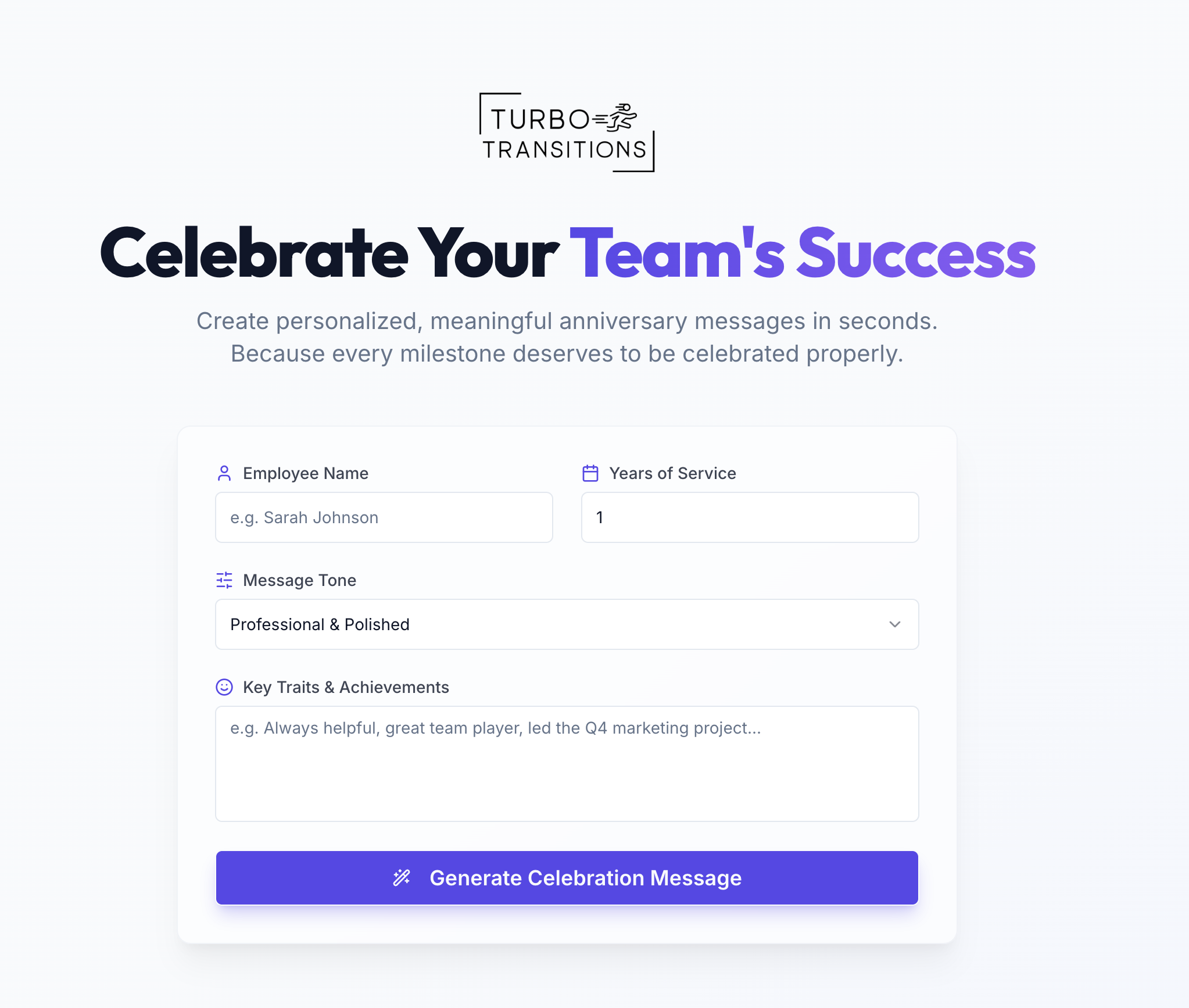
Anniversary Milestone Message Generator
What it does:
The Workiversary Milestone Generator is an AI-powered tool that creates personalized celebration messages for employees reaching work anniversaries. Users enter an employee's name, years of service, key traits or achievements, and select a desired tone — professional, casual, humorous, or heartfelt.
The tool then generates three unique message variations that can be copied and shared on platforms like Slack or LinkedIn. It's designed to make recognizing employee milestones quick, thoughtful, and effortless.
How it works:
You fill out a simple form with the employee's name, how many years they've been with the company, a few words about their personality or accomplishments, and the tone you'd like the message to have.
When you click "Generate Celebration Message," the tool sends that information to an AI engine that crafts three distinct message options tailored to your inputs. Each message can be copied to your clipboard with one click, ready to paste into an email, Slack channel, or social media post.
Why it's beneficial for HR professionals:
Writing personalized anniversary messages for every employee can be time-consuming, especially at larger organizations where milestones happen frequently. This tool saves HR professionals significant time while still producing messages that feel genuine and tailored to each individual — not generic or cookie-cutter.
It ensures consistent recognition across the organization, which is proven to boost employee morale and retention. Having multiple tone options also lets HR match the message style to the company culture or the specific employee's personality, making each recognition moment feel authentic.

Why Showing Appreciation During Milestones and Anniversaries Is Important
Work anniversaries and milestones are small moments that make a big difference in how employees feel about their work and their future with the company.
When people feel seen and valued, they’re more likely to stay engaged, perform at a higher level, and stick around through the inevitable hard seasons.
Consistent recognition also strengthens culture because it signals what your organization rewards and respects, and it gives managers an easy, positive touchpoint that isn’t tied to performance reviews or compensation conversations.

“Take care of your employees and they’ll take care of your business.”
— Richard Branson, Founder of Virgin Group
Frequently Asked Questions (FAQ)
What counts as a meaningful work milestone worth recognizing?
The obvious ones are work anniversaries (1 year, 3 years, 5 years, 10 years), but meaningful milestones also include promotions, internal role changes, major project completions, certifications, “first big win,” and return-from-leave transitions.
The key is to choose milestones that align with your culture and are scalable to recognize consistently. If you only celebrate a few people, recognition can feel political, so it’s better to define a clear set of milestones and stick to it.
Key Takeaway: Meaningful milestones are the ones you can recognize consistently, not just the ones that feel exciting in the moment.
Do workiversary messages actually improve retention or is it just “nice to have”?
On their own, workiversary messages won’t fix deeper issues like low pay or poor management, but they absolutely contribute to retention by strengthening belonging and appreciation. Employees are more likely to stay when they feel seen, and anniversaries create a natural moment to reinforce that.
Recognition is one of the few low-cost levers HR can pull that reliably boosts morale when it’s done sincerely and consistently.
Key Takeaway: Recognition won’t replace good management, but it’s a simple, low-cost way to strengthen retention and engagement.
What makes a workiversary message feel genuine instead of generic?
Specificity is everything. Mention something real: a strength the person brings, a project they helped drive, how they show up for teammates, or the impact they’ve made. Keep it short, warm, and human, and avoid overly corporate phrasing that sounds copied and pasted. Even one concrete detail can transform a message from “template” to “thoughtful.”
Key Takeaway: One specific detail about impact or character is what makes recognition feel real.
Who should send workiversary messages: HR, the manager, or leadership?
The manager’s message usually matters most because it comes from the person closest to the day-to-day work. HR can support the process by prompting managers, providing suggested language, and ensuring no one gets missed. Leadership messages can be powerful for major milestones (5+ years, 10+ years), but they should be used selectively so they stay meaningful.
Key Takeaway: Manager recognition carries the most weight, while HR’s role is to enable consistency and coverage.
What’s the best channel for celebrating milestones: Slack, email, all-hands, or LinkedIn?
It depends on your culture and the employee’s preferences. Slack or Teams works well for quick public recognition, email is better for a more personal note, and all-hands can be great for major milestones if your company already celebrates publicly.
LinkedIn is best when the employee is comfortable with public visibility and you’re confident it won’t feel performative. When in doubt, default to internal recognition first.
Key Takeaway: Match the channel to your culture and the employee’s comfort level, not what looks best publicly.
Should recognition be public, private, or both?
Both can be ideal. Public recognition reinforces culture and lets peers celebrate together, while a private message feels personal and often means more. A simple approach is a short public shout-out plus a brief personal note from the manager. That combination tends to land well without being over the top.
Key Takeaway: Public builds culture, private builds connection, and combining them creates the best result.
How do we handle milestone recognition in larger companies without it becoming a burden?
Systematize the trigger and simplify the output. Use HRIS reminders, Slack automations, or a monthly manager digest that lists upcoming anniversaries. Provide pre-approved message templates that managers can personalize with one or two details. The goal isn’t to write a novel, it’s to create consistent moments of appreciation without adding hours of work.
Key Takeaway: Automate the reminders and keep the process lightweight so recognition scales without burning out HR.
What if we miss someone’s work anniversary?
Acknowledge it quickly and keep it simple. A late message is better than none, and most employees appreciate that you corrected it. You can say something like, “We missed the date, but we didn’t want the moment to pass without recognizing you.” Then add one personal detail about their impact so it doesn’t feel like damage control.
Key Takeaway: Fix missed anniversaries quickly with a sincere note and a specific callout of impact.
Should workiversary recognition include gifts or bonuses?
Not always, but it can, depending on your budget and culture. Some companies reserve gifts for bigger milestones (3, 5, 10 years) and keep smaller anniversaries as message-only. What matters most is fairness and consistency. If you do gifts, set clear thresholds and keep the approach equitable across departments.
Key Takeaway: Gifts can amplify recognition, but consistency matters more than cost.
How do we avoid recognition feeling forced or performative?
Keep it employee-centered, not brand-centered. Focus on what the employee contributed, how they show up, and why they matter to the team. Avoid overly polished corporate language, and don’t overdo public praise if that’s not your culture. The best recognition feels like something a real person would say, not something written for optics.
Key Takeaway: Recognition feels authentic when it’s specific, human, and aligned with your culture.
How far in advance should HR plan for work anniversary recognition?
If you want it to be consistent, plan at least monthly. A simple monthly cadence gives managers enough runway to add a personal detail and choose the right channel. For larger companies, a rolling 30-day view of upcoming anniversaries works well so nothing is missed and recognition doesn’t become a last-minute scramble.
Key Takeaway: A monthly planning rhythm is usually enough to keep recognition consistent and stress-free.
Should we recognize “half-year” milestones like 6 months for new hires?
It can be useful, especially in roles with long ramp times or in companies that are trying to reduce early attrition. A 6-month note can reinforce that the employee is on track and that their work is seen, which is powerful during the period when many people decide whether they’ll stay. Just keep it lighter than an anniversary so it doesn’t feel inflated.
Key Takeaway: A 6-month milestone can support early retention when it’s brief and genuine.
What should we say for a one-year workiversary versus a five- or ten-year milestone?
For one year, focus on momentum and growth: what they’ve learned, where they’ve contributed, and why you’re excited about what’s next.
For five years, highlight sustained impact and reliability, plus the specific ways they’ve shaped the team. For ten years and beyond, make it more personal and meaningful, recognizing legacy contributions and leadership influence, and consider involving leadership or a more formal note.
Key Takeaway: The longer the tenure, the more the message should shift from “great start” to “lasting impact.”
How do we handle milestone recognition for remote or distributed teams?
Remote teams often miss the informal “celebration moments” that happen in an office, so recognition matters even more. Use a consistent digital ritual, such as a dedicated Slack channel, a short team call shout-out, or a manager voice note. If your culture supports it, ask teammates to add quick comments so the employee feels a group celebration, not a single HR message.
Key Takeaway: In remote teams, consistent digital rituals make recognition feel shared and real.
What if the employee is shy or doesn’t like public attention?
Respect that preference. Some people appreciate a private message far more than a public post, and forcing public praise can feel uncomfortable. A simple solution is to let employees choose their recognition style in onboarding or a quick HR preference form, then follow it.
Key Takeaway: Let employees opt into public recognition so appreciation feels good, not awkward.
Should we personalize messages with performance-related details or keep it separate?
Keep it focused on appreciation, not evaluation. You can mention positive impact, strengths, and contributions, but avoid language that sounds like a performance review. The goal is recognition and belonging, not rating. If you want to connect the milestone to growth conversations, do that in a separate 1:1.
Key Takeaway: Mention positive impact, but don’t turn a celebration into a performance review.
How can we help managers who struggle with writing recognition messages?
Make it easy for them. Give a short template, a few tone options, and a prompt list like: “What do they do exceptionally well?” “What have they improved?” “How do they help the team?” Managers usually just need a starting point. Also, encourage them to add one specific detail so it doesn’t read like a generic note.
Key Takeaway: Templates plus one specific detail is the fastest path to better manager recognition.
What are the best practices for recognizing milestones across different cultures and regions?
Be mindful of how public praise, humor, and personal details can land differently. Keep the message respectful and work-focused, and avoid jokes or references that might not translate well. When possible, align with local norms and encourage local leaders to tailor the delivery while keeping the core recognition consistent.
Key Takeaway: Keep recognition respectful and adaptable so it feels appropriate across cultures.
How do we measure whether milestone recognition is actually working?
You can look at both qualitative and quantitative signals. Qualitatively, track employee feedback, manager adoption, and engagement in recognition channels. Quantitatively, watch retention trends, eNPS, engagement survey items tied to appreciation, and participation rates in recognition programs. Even simple metrics like “percent of anniversaries recognized on time” can show whether the process is healthy.
Key Takeaway: Measure participation and sentiment first, then connect recognition consistency to engagement and retention signals.
What’s the biggest mistake companies make with milestone recognition programs?
Inconsistency. When recognition is sporadic, overly dependent on individual managers, or only given to certain teams, it can create resentment instead of appreciation. The second biggest mistake is over-automation with zero personalization, which can feel empty. A reliable system with light personalization is the sweet spot.
Key Takeaway: Consistent recognition with a small personal touch beats both randomness and robotic automation.
Disclaimer
Disclaimer. These tools and their outputs are for informational purposes only and are not legal, compliance, financial, tax, or HR advice; using them does not create an attorney–client or advisory relationship. Laws vary and change—always review results with your legal, benefits, and HR advisors before acting.
Data & access. By default we don’t store personally identifiable information you enter. Each tool is unlocked per page with your work email so we can send exports/resources and optional help; one tool’s email doesn’t unlock others, and you can unsubscribe anytime. If you choose Save, your project is stored securely and auto-deleted after {{X}} days; you can request deletion anytime at contact@turbotransitions.com.
Privacy & security. We use commercially reasonable safeguards, but no method is 100% secure. For saved projects you remain the data controller and we act as a processor under your instructions. You’re responsible for reviewing outputs before sharing and for controlling access to shared links/PDFs/CSVs. We may use de-identified, aggregated usage data to improve the tools; we do not sell personal data.
Scope, third parties & liability. Outputs are generic/non-jurisdictional and may not be complete or current; compliance-adjacent items include “verify with counsel” reminders. Linked third-party sites (e.g., carriers/HRIS) have their own policies—we’re not responsible for their content or security. Services are provided as is/as available with no warranties; to the extent allowed by law, we’re not liable for indirect or consequential damages.
Tags: work anniversary message, workiversary message, employee anniversary message, work anniversary messages for employees, work anniversary message examples, employee recognition messages, employee milestone messages, work anniversary email to employee, Slack work anniversary message, work anniversary message generator